

01
Your browser locks the request first
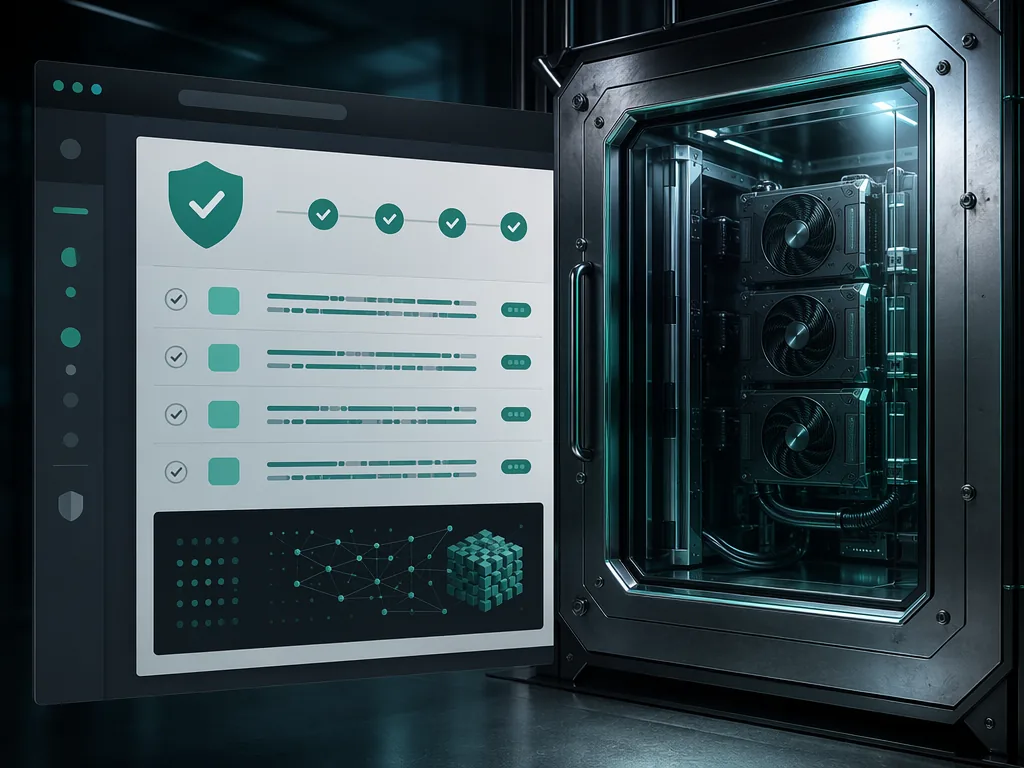
The prompt is encrypted on your device before it leaves the page. Our gateway receives ciphertext, not the readable question.
Private AI requests on secure GPUs
Confidential AI
Prompts often contain client names, contracts, source code, medical details, financial plans, unreleased products, and private files. Trust AI encrypts them on your device, sends only ciphertext through our server, and decrypts the answer only in your browser.
Why it matters
Your prompt may pass through application logs, debugging tools, queues, vendor accounts, support systems, and retention policies before a model answers. If that text is readable anywhere along the path, a private question can become discoverable business, legal, health, or personal data.
How it works
GPU confidential computing creates a protected place where AI work can run while the request stays isolated from cloud operators, administrators, and ordinary server software. In plain terms: your browser locks the request, the server routes the locked box, the protected GPU opens it only inside the secure environment, and the answer is locked again before it returns.
The prompt is encrypted on your device before it leaves the page. Our gateway receives ciphertext, not the readable question.
The backend checks balance, forwards the encrypted request, and records only operational metadata such as model, estimates, and proof hashes.
The model runs inside hardware-protected compute. Attestation is the proof that the expected secure environment exists before secrets are sent.
The response is returned encrypted and decrypted only in your browser. The client also shows hashes and signature data so the path can be checked.
What changes
Confidential GPU execution protects AI code and data while the model is processing it, not only while files are stored or sent over the network.
The client checks fresh attestation evidence and the model encryption key before it sends encrypted requests.
The downloadable client is built from public source so users can compile it, calculate its checksum, and compare it with the published release.
Trust, but verify
The client fetches fresh attestation evidence, checks the model encryption key, encrypts locally, and shows proof hashes after the response. You can use the public client source to build the same user client and compare checksums.
Payment links are being configured.
Start here: choose a secure model, then run it in Private Inference.